Picture a weekly team meeting. The agenda moves along, decisions get made, and everyone leaves on time. By most measures, it went well.
Now picture what did not happen. The engineer who spotted a flaw in the plan stayed quiet. The newly promoted manager nodded along instead of challenging a deadline she knew was unrealistic. The analyst with a sharper idea decided it was not worth the risk of speaking first.
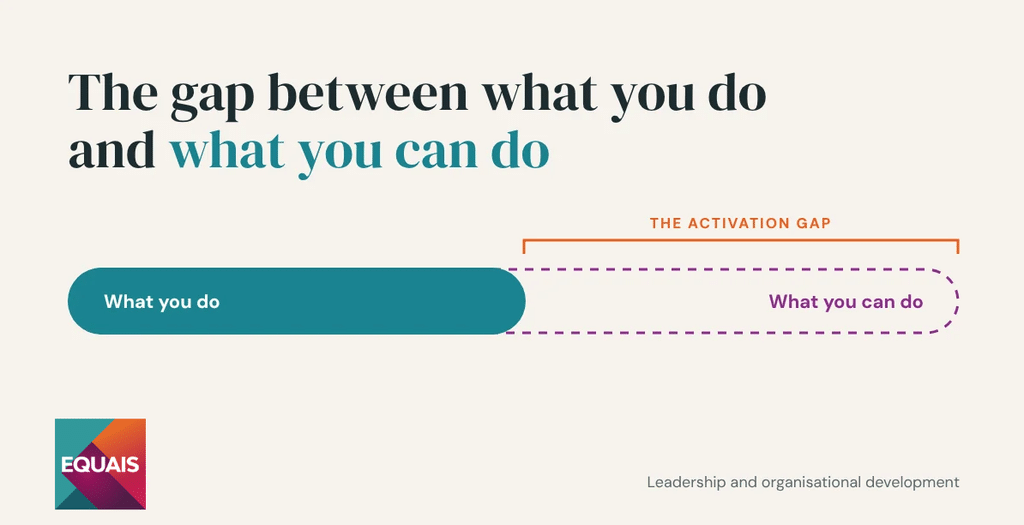
Nothing went wrong in that room. But something valuable was left on the table. We call it the gap between what you do and what you can do.
What is the activation gap?
The activation gap is the distance between what a person or team is capable of and what they actually deliver day to day.
It is not a skills gap. The people inside it usually have the knowledge, the experience, and the ideas. What is missing is the confidence, the structure, or the environment that allows that capability to show up when it matters.
We have yet to meet an organisation without some version of it. The more useful question is how wide it has become, and what it is costing you.
How the gap shows up at work
The gap rarely announces itself. It hides in ordinary moments, which is exactly why it is so easy to miss.
Sometimes it is the meeting where nobody pushes back, not because everyone agrees, but because disagreeing feels like more trouble than it is worth. Sometimes it is a brilliant engineer who gets promoted, and suddenly has to manage the same colleagues she used to have lunch with. Nobody shows her how, so she does her best and hopes it works out.
We see it in teams where everyone is working hard but not quite in the same direction. And we see it every appraisal season, when people who have done genuinely good work cannot find the words to explain it, while others with less to show simply tell their story better.
Each of these moments feels small. Add them up across a year, and they are often the difference between a team that is good and a team that is exceptional.
What it costs, and who pays
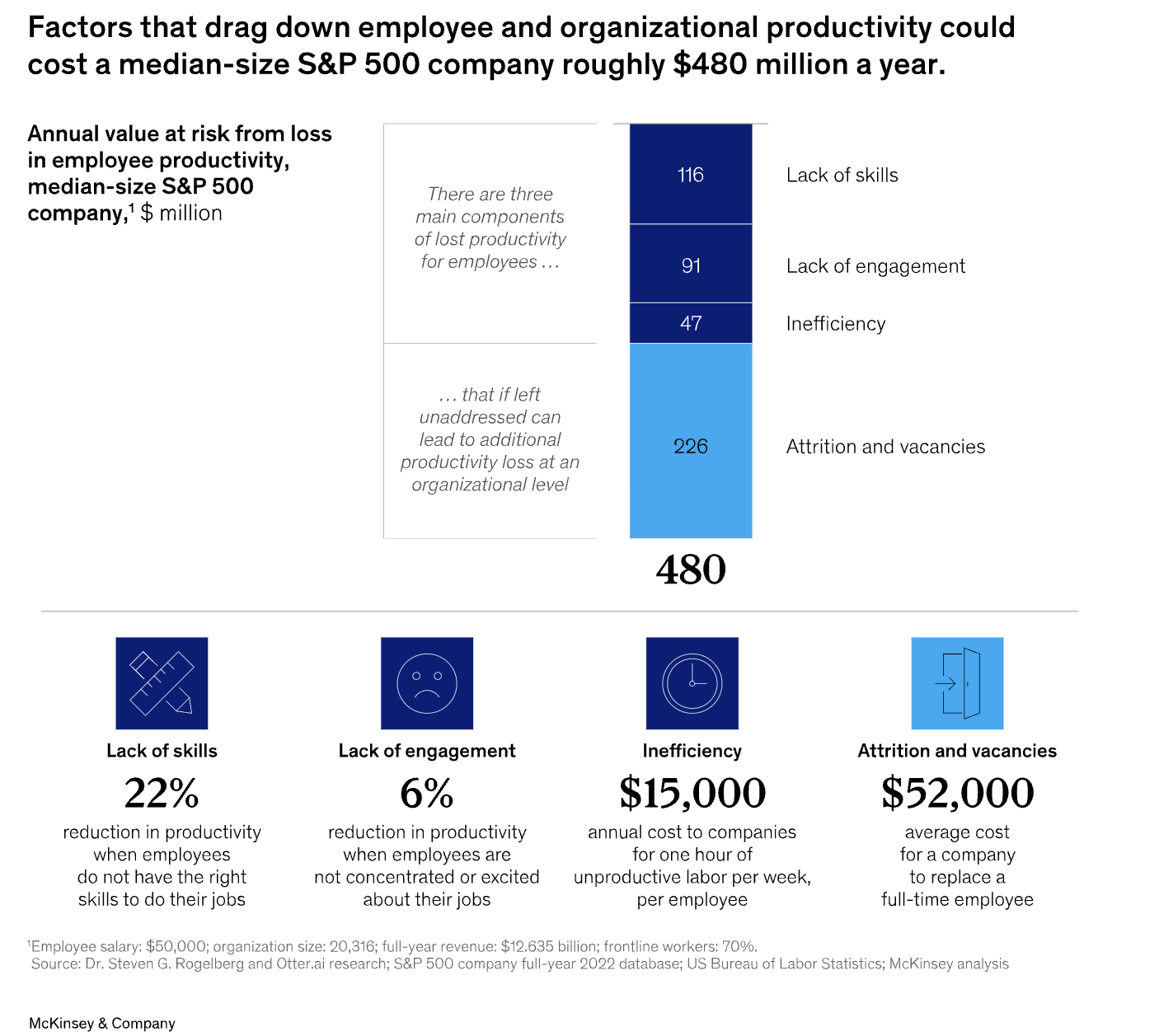
For individuals, the gap shows up as frustration. People know they can contribute more, yet something keeps them from doing it. Over time, that turns into disengagement, or into a quiet search for a role elsewhere.
For organisations, the cost is harder to see but just as real. Revenue growth stalls without an obvious reason. Innovation slows because the best ideas never reach the table. Promotions go to the people who are most visible rather than the people who are most capable.
So while the activation gap feels like a people topic, it lands on the balance sheet. And closing it is one of the most direct ways we know to lift performance without adding a single person to the team.
It is not a talent problem
When a team underdelivers, the instinct is often to look for better people. In our experience, the people are rarely the problem.
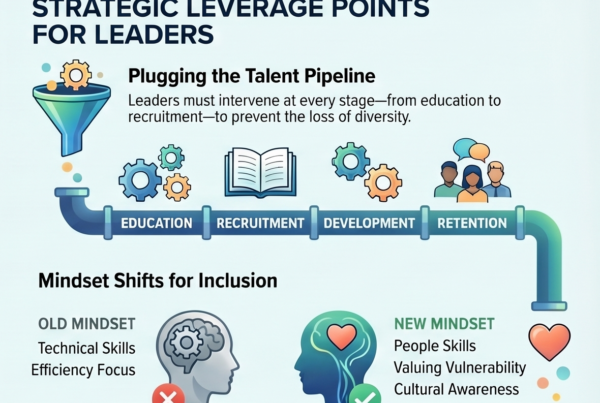
The activation gap usually comes from two places. The first is capability that has never been trained: how to speak with confidence in a high-stakes conversation, how to lead former peers, how to present your own work. These are learnable skills, yet most professionals are expected to pick them up on the job.
The second is the environment. A culture where speaking up feels risky, unclear priorities, or structures that reward visibility over contribution will hold back even the most talented team.
Both can be changed. And when they are, leaders are often surprised by how quickly things move. That is because nothing new had to be built. The capability was already there, waiting for permission.
How we work on it
EQUAIS started with a simple belief: most people are already capable of more than their work shows. Our job is to help that capability come through.
We are a Munich-based leadership and organisational development firm, working with mid-sized companies, startups and accelerators across Europe. Behind every programme is a network of trainers we have handpicked and vetted ourselves. Each one brings real experience from the rooms they teach about, whether that is a boardroom, an engineering team or a founder’s first hire.
We do not arrive with a fixed curriculum. We start by listening to what is actually happening in your team, then shape the work around it. Sometimes that means a single workshop on speaking up in high-stakes conversations. Sometimes it is a longer programme for first-time managers, or a monthly series for a startup portfolio through our Startup Founder’s Lab.
We deliver online or in person, in English, German or whichever language your team works in. What stays the same is the goal: moving people from good to exceptional, and making that change last after the session ends.
A question to take with you
Think about the last meeting you were in. Who stayed quiet? What might they have said?
That silence is where the activation gap lives, and it is often where your next big improvement is waiting.
If you recognise your team in any of this, we would be glad to talk. A twenty-minute conversation is usually enough to see where the gap sits and what it would take to close it.