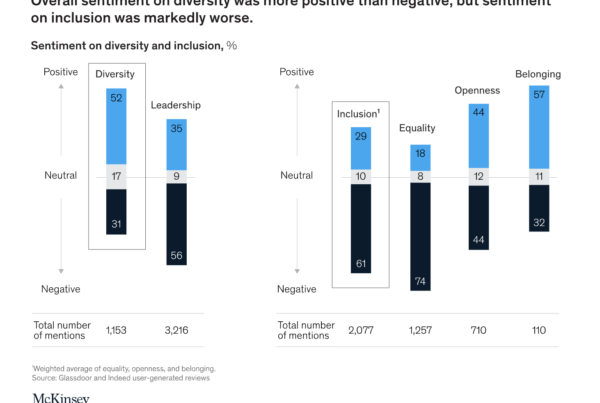


Latin America has made visible progress on inclusion over the past decade, particularly in advancing gender equality across workplaces and leadership. But a deeper, less discussed challenge remains.
Socio-economic inequality continues to shape who gets access to opportunity.
A recent World Economic Forum perspective highlights that while many organisations have embraced diversity initiatives, far fewer are addressing the structural barriers linked to class. Biases around education, background, language, and social exposure still quietly influence hiring, promotion, and leadership pathways.
The data reflects this gap. While nearly 90 percent of companies have targets related to gender diversity, only about 10 percent have similar goals for including individuals from socio-economically disadvantaged backgrounds.
This creates a disconnect between talent availability and talent access.
In a region where a significant portion of the population remains socio-economically vulnerable, the exclusion of this talent is not just a social issue. It is a business limitation. Organisations risk narrowing their talent pool, reinforcing homogeneity, and missing out on diverse perspectives that drive innovation and long-term growth.
The shift ahead is clear. Inclusion needs to move beyond visible dimensions and address the structural realities that shape opportunity.
True inclusion is not only about who is present in the organisation, but also about who has a fair chance to enter, grow, and lead.
Read more: https://www.weforum.org/stories/2026/03/latin-america-inclusion-class-social-mobility/