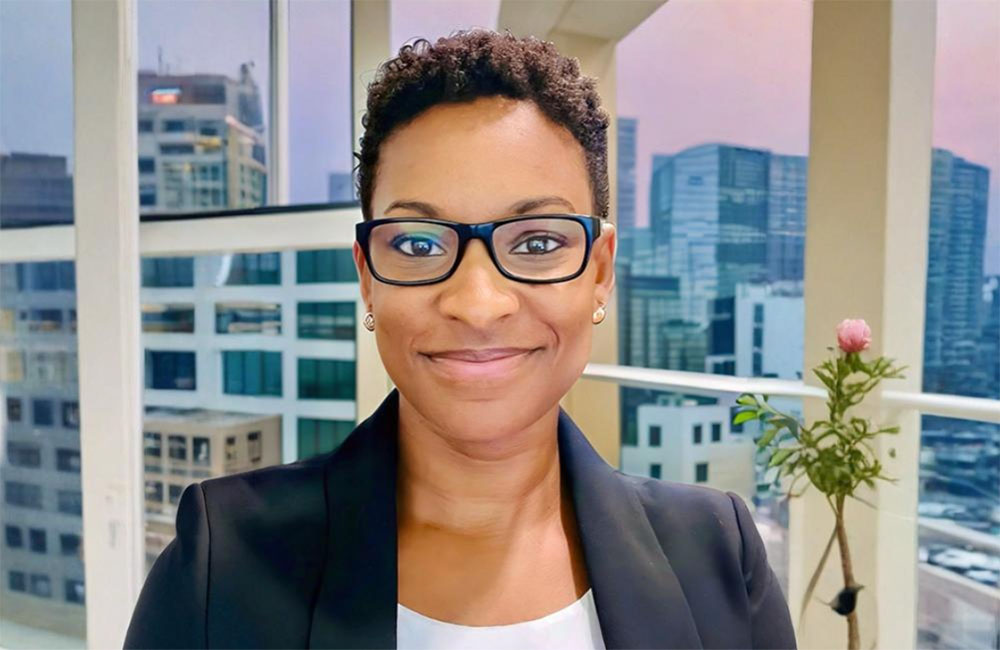

Dr. Atiera Coleman serves as Chief Equity Officer for the State of Illinois, appointed by Governor JB Pritzker in July 2023. A nationally recognized equity leader, she was named one of ONCON’s Top 50 DEI Leaders in 2025 and included on the 2025 Curve Magazine Power List for her impact on culture, policy, and social change across North America.
With a professional foundation in research methodology, assessment and evaluation, and institutional facilitation, Dr. Coleman brings both analytical rigor and lived insight to her work. Her career spans higher education and public service, including leadership roles as Equity Manager for Rock County, Wisconsin, and Associate Dean of Student Success, Equity, and Community at Beloit College.
Across these roles, a consistent thread defines her leadership: embedding equity not as a standalone initiative, but as an operational discipline woven into systems, policies, and everyday decision-making. Her approach centers humanity, accountability, and sustainable transformation within complex public institutions.
In the discussion that follows, Dr. Coleman reflects on how equity shapes leadership, decision-making, and culture within one of the largest public systems in the United States.
Question: Your role focuses on equity at the state level. What originally drew you into this work, and how has it shaped the way you think about leadership today?
Dr. Coleman: My career began in academia, where I oversaw federally funded student support programs designed to help underrepresented students succeed in undergraduate and graduate education. Although equity was not explicitly part of my job title, much of my work involved advocating for equitable support from the institution, fair treatment from faculty, and equal access to academic and professional opportunities. Through this work, the college recognized the need for a dedicated role to embed equity into policies, procedures, and curriculum, leading to the creation of an Associate Dean position focused on advancing institutional equity. Striving for liberation for all has been a consistent thread throughout my work ever since, and the equity lens I developed continues to shape how I lead my team.
During my years in academia, I noticed that many underrepresented students held a narrow view of professionalism, often believing that success required fitting a specific archetype in interests, behavior, and presentation. When students did not see themselves reflected in that mold, they began to doubt their potential, despite being exceptionally capable. This realization shaped my mentorship approach. I became more intentional about showing up authentically, sharing my interests, and being honest about burnout and mental health days.
I want people to understand that it is oppressive systems, not merit, that have historically elevated a narrow set of archetypes into positions of power. That does not make those archetypes inherently better or more effective, nor does it mean that people who look, speak, or think differently cannot lead with impact and excellence.
Question: In a large public institution such as the state government, what does inclusive and equitable leadership look like in everyday practice, beyond policies and directives?
Dr. Coleman: It looks like leading with kindness, practicing appropriate vulnerability, modeling the behaviors that foster inclusive environments, and prioritizing wellness for both yourself and your team.
Question: Where do you most often see a gap between what leaders intend around equity and what people actually experience in public systems?
Dr. Coleman: I believe leaders often start with good intentions, but the organizational change required for this work can be uncomfortable, and that discomfort can make some leaders want to roll the equity work back. Depending on the size of the organization, another common pitfall is not including all perspectives in the room when decisions are made, which often results in policies and procedures that do not equitably serve all levels of the organization. Effective leaders, however, are able to receive feedback from their team and organization without taking it personally, using it instead as valuable data to create more inclusive spaces and a stronger sense of belonging.
Question: From what you have observed, what leadership behaviors make the biggest difference in building trust and fairness across teams and communities?
Dr. Coleman: The most impactful leadership behaviors come from understanding that not everyone navigates the world in the same way we do. I am intentional about creating safe, inclusive spaces where people feel comfortable offering feedback, which includes using multiple ways to explain tasks and tailoring supervision to meet individual needs. This approach is especially valuable when training on psychological safety, as achieving it requires acknowledging one’s positionality, being open and vulnerable enough to recognize the humanity in others, and remaining willing to learn.
Question: How can equity be better built into everyday decision-making, rather than treated as a separate programme or office?
Dr. Coleman: This work cannot be accomplished through a one-off annual training. It must be intentionally woven into all areas of an institution. This can include regularly dedicating time in weekly or monthly meetings to discuss equity challenges and progress toward equity goals, establishing committees or task forces that meet consistently to hold the organization accountable, and integrating questions about equity, sense of belonging, and psychological safety into routine processes such as annual evaluations. Creating this regular cadence normalizes the work and prevents the burden from falling solely on individuals. Equity should be treated like other accessibility needs, essential to the overall health and effectiveness of the organization.
Question: What kinds of resistance or misunderstanding do you most often encounter when advancing equity work in government, and how do you usually navigate them?
Dr. Coleman: There is a common misconception that equity means giving some people more than others, or taking resources away from one group to give undeserved advantages to another. That belief is false. Equity does not mean giving more; it means giving access.
Providing information on a website in multiple languages does not give anyone an advantage. It ensures that more people can understand the same information. Sharing job postings in new spaces so that diverse communities know opportunities exist does not lower standards or create unfairness. It simply ensures equal access to the opportunity to apply. No one is being handed a job or skipping the process. The door is simply being unlocked.
Equity is not about favoritism; it is about fairness. Imagine giving everyone a pair of shoes in the same size. Everyone would receive the exact same thing, but not everyone would be able to walk comfortably or safely. Treating everyone the same does not create fairness. Equity asks a different question: what does each person need to move forward? Different shoes are not a reward; they are a tool. Providing the right tools does not mean giving more, it means making access real.
Beyond misconceptions, one of the biggest obstacles to equity work is fear. Too often, equity conversations are rooted in fear of saying the wrong thing, fear of being judged, or fear of being labeled a bad person. We cannot learn or grow from a place of fear.
A common concern I encounter is the belief that having bias makes someone a bad person. In reality, we all have biases shaped by our upbringing, media, education, and lived experiences. One of the most common forms is affinity bias, the unconscious tendency to gravitate toward people who are similar to us. This is something everyone experiences, and in itself, it is not inherently harmful.
Having bias does not make us bad people. Harm occurs when we fail to acknowledge our biases, refuse to examine them, or build systems, policies, and procedures that ignore their impact. When bias goes unexamined, we create workplaces and institutions that are not inclusive or equitable. This is the work: accepting that we are human while intentionally creating systems that promote fairness, access, and belonging for everyone.
Question: How do leaders balance political, operational, and public pressures with the need for psychological safety and respect within their teams?
Dr. Coleman: Centering everyone’s humanity, using effective communication strategies to understand the individual needs of your team, and modeling healthy wellness practices to prevent burnout for yourself and your team.
Question: What tells you that equity is becoming part of leadership culture, rather than remaining a stated priority only on paper?
Dr. Coleman: I know equity is becoming embedded in leadership culture when the work continues beyond the initial discomfort and leaders are able to engage in honest, real, and vulnerable conversations. This work requires strong support from leadership and a commitment to transformation, not performative efforts. Equity work can be uncomfortable because it challenges the status quo, may add to already stretched workloads, and often requires meaningful change. Those realities can make people hesitant to fully engage.
I encourage people not to measure effectiveness by how happy others are with the work, because organizational change is rarely comfortable. Instead, impact should be measured by engagement. When the work or trainings prompt strong reactions, it signals that people are paying attention, and that engagement creates an opening for curiosity, trust-building, and addressing misconceptions or misinformation.
Question: Looking ahead, what do you think will define strong and credible equity-focused leadership in public institutions over the next five years?
Dr. Coleman: We are in a complex moment given the current political climate. As equity efforts face increased scrutiny, rollbacks, and direct attacks, fear around this work has grown. What will define strong and credible equity-focused leadership over the next five years are institutions that take deliberate steps to embed equity into legal frameworks and precedent, protecting it from political shifts, while also threading the work across all areas of the institution. When equity is integrated into organizational culture, supported by accountability measures, and built for sustainability, it becomes far more resilient to being undermined or dismantled.
Question: When you look across the leaders and communities you work with, what gives you the most optimism about the future of leadership and equity?
Dr. Coleman: What gives me the most optimism is the ongoing fight for liberation, the intentional work of building community, and the innovative ways people are reframing this work to make it more sustainable.