

Most organisations today do not struggle with a lack of talent. They have capable teams, experienced professionals, and people who, on an individual level, can deliver strong work. From the outside, everything appears to be functioning. Targets are met. Work gets done.
And yet, something feels slightly off.
Some teams move faster than others. Some take ownership without being asked. Others do what is required, but rarely go beyond it. The difference is not always obvious, but it is consistent enough to raise a quiet question. If the teams are strong, why are the outcomes not equally strong?
 Capability is present, but not always expressed
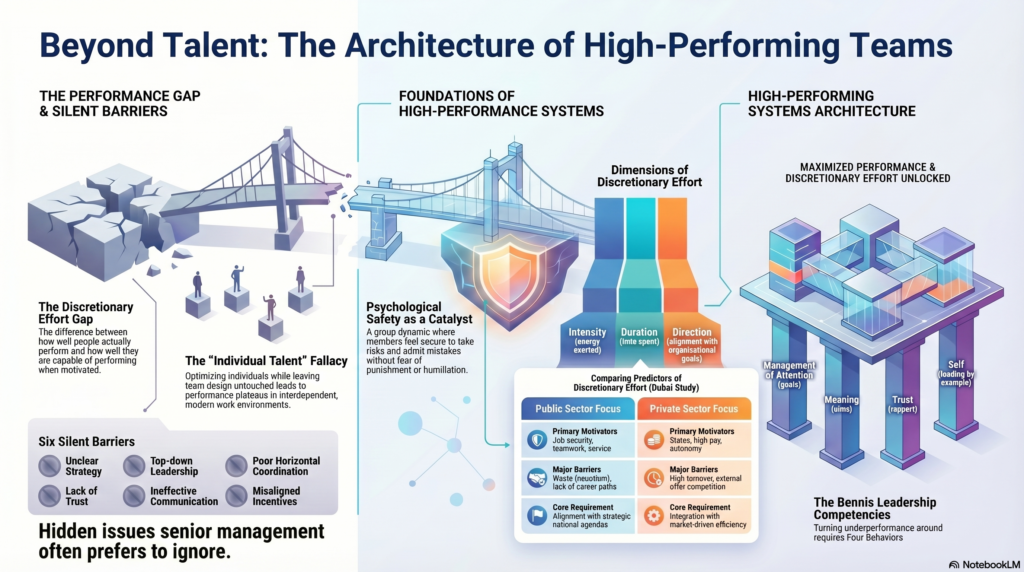
Having capable people in a team does not automatically translate into strong performance. Capability is only potential. What matters is whether that potential is expressed consistently.
In many teams, people know what to do. They have the skills, the experience, and often even the intent. But how much they actually contribute depends on the environment around them.
You can see this in everyday moments. Someone has an idea but chooses not to share it. Someone could take ownership but waits for direction instead. Someone delivers what is expected, but not what they are fully capable of.
Nothing is technically wrong. But something is not fully working either.
Leadership behaviour quietly shapes performance
The biggest influence on this gap is often leadership behaviour. Not leadership in a broad, inspirational sense, but in small, repeated actions. How a leader responds when something goes wrong. How clearly expectations are set. Whether decisions feel consistent or unpredictable. Whether effort is recognised or overlooked.
Teams pay attention to these patterns, even if no one speaks about them directly. In one team, people feel comfortable stepping forward. They take initiative, contribute ideas, and engage more deeply. In another, people hold back. They wait, observe, and operate within safer boundaries.
Over time, these patterns become the team’s default way of working. The talent does not change. The behaviour around it does.
Why similar teams deliver different outcomes
This is why organisations often see very different outcomes across teams that look similar on paper. The same roles, similar experience, and the same organisational goals. Yet one team feels energised and proactive, while another feels slower and more cautious.
The difference often comes down to how decisions are made and experienced.
When decisions are clear and timely, teams move with confidence. They know where they stand and what is expected. When decisions are inconsistent, delayed, or dependent on individual leaders, teams become careful. They start to second-guess, to wait, to hold back. Not because they lack capability, but because the environment does not consistently support action.
The hidden cost no one talks about
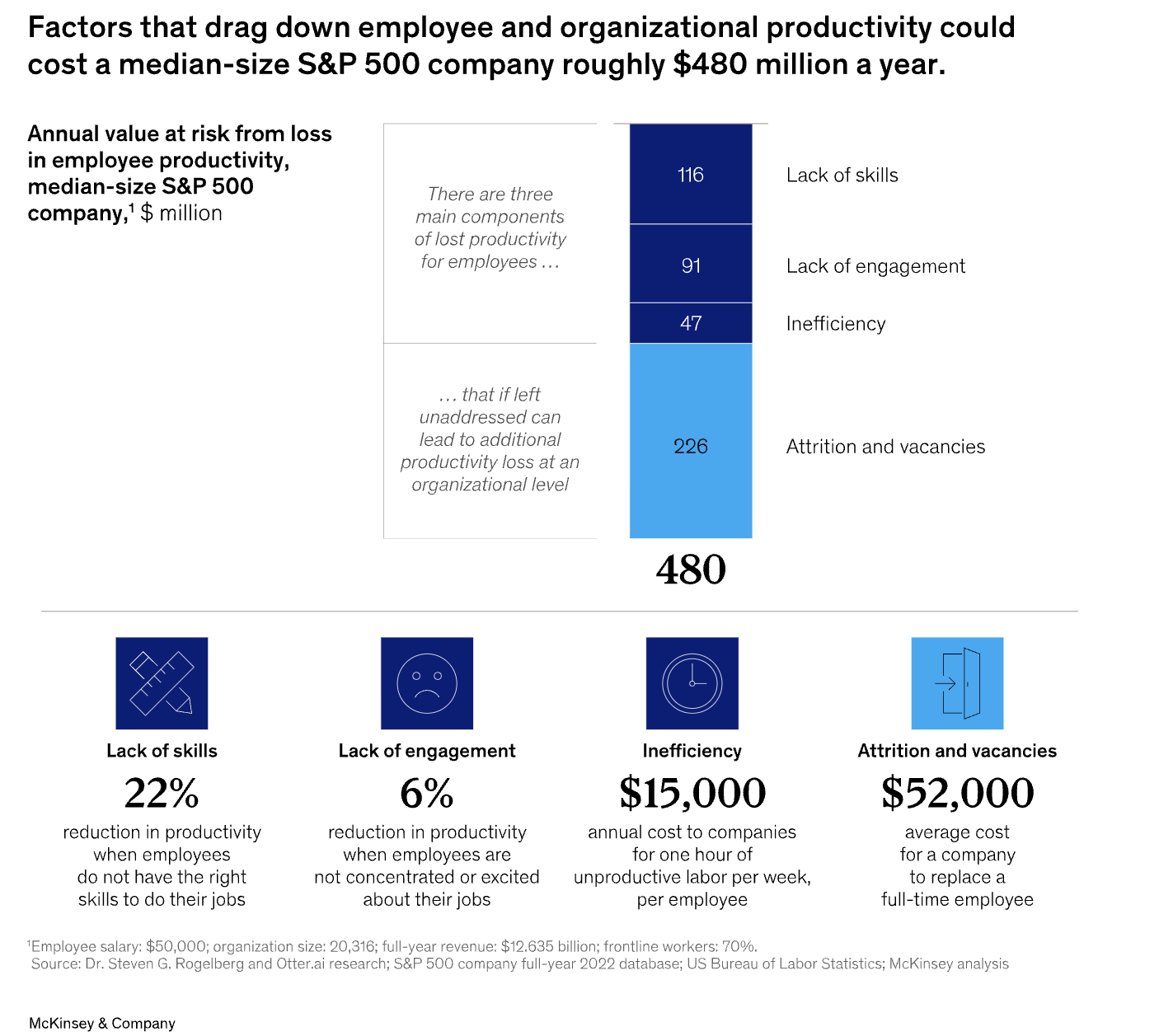
This gap carries a cost, but it is rarely visible in a dramatic way. It does not show up as a failure. It shows up as underutilisation. You see it in meetings where only a few voices dominate. You see it in ideas that never get expressed. You see it in ownership that feels partial rather than complete. Work gets done, but not at the level it could. Over time, this leads to slower progress, fewer innovations, and teams that feel capable but not fully engaged.
Research reflects this reality. Engagement levels remain low in many organisations, despite having skilled employees. At the same time, teams with high engagement consistently outperform others in profitability and productivity. This suggests a simple but important truth. The issue is not the talent. It is how much of that talent is actually being used.
Moving from capability to consistent performance
Improving leadership performance, therefore, is not only about hiring better people or pushing teams harder. It is about creating consistency in how teams operate.
Consistency in how decisions are made. Consistency in how information becomes action. Consistency in how ownership and accountability are experienced. When these elements are aligned, something shifts. Teams no longer rely on individual leaders to perform well. Performance becomes part of how the system works.
Where EQUAIS comes in
EQUAIS focuses on this often overlooked layer of performance. It works with organisations to strengthen leadership behaviour, improve decision quality, and create consistency across teams. The aim is simple. Not to change the people, but to ensure that the capability already present is fully and consistently utilised.
Strong teams do not underperform because they lack ability. They underperform because that ability is not always activated. And once you begin to see that, the opportunity becomes difficult to ignore.