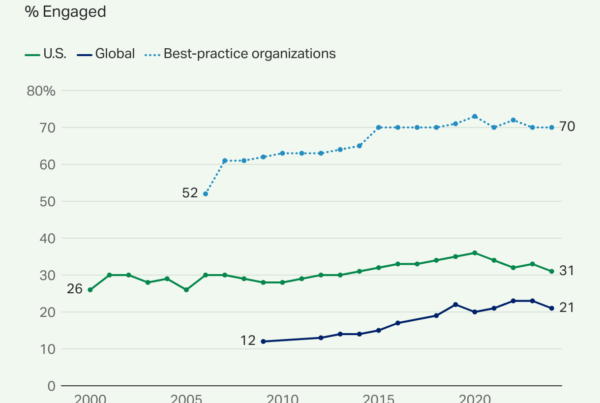
Most organisations are not short on talent. They are short on activation.
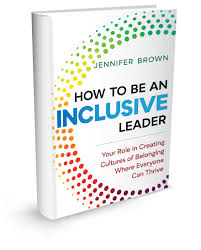
When we read How to Be an Inclusive Leader, what stood out was not simply the language of inclusion. What stood out was how clearly it explains something we see repeatedly across organisations. Leadership behaviour determines how much of that existing talent actually shows up in performance.
The real gap is not intent. It is awareness in action.
Most leaders operate with the belief that they are fair, objective, and consistent. In many cases, that belief is genuine. However, organisations do not experience intent. They experience decisions, behaviours, and patterns over time.
When those patterns are observed closely, certain trends begin to emerge. Some voices consistently carry more influence in decisions. Some individuals are recognised faster than others. Some perspectives rarely make it into the final conversation. These patterns are rarely deliberate, but they are consistent enough to shape outcomes.
From our perspective, this is not a culture issue. It is a question of decision quality that compounds over time. Even small biases or blind spots, when repeated, begin to influence how performance is distributed across teams.
Leadership maturity is uneven, even within the same organisation
One of the most useful frameworks in the book is the idea that leaders operate at different levels of awareness. Some are unaware of how their behaviour impacts others, while some are actively trying to adjust their approach, and a few go further to influence systems around them.
What we see in practice is that organisations often assume a level of alignment that does not exist. Leaders within the same company can operate at very different levels, particularly when they are under pressure. This lack of alignment creates inconsistency.
Two teams with similar talent can deliver very different outcomes. The difference is rarely capability. It is how leadership shows up in moments of decision-making, communication, and prioritisation.
Behaviour is where leadership becomes measurable
Leadership is often discussed in terms of values or intent, but in practice, it becomes visible through behaviour. The book reinforces that it is not what leaders believe that defines them, but what they repeatedly do.
This shows up in everyday moments that are easy to overlook. It is reflected in who is invited into discussions, whose input influences decisions, how disagreement is handled, and how clearly direction is communicated.
Each of these moments may appear minor in isolation. However, over time, they shape how people contribute, how confident they feel in sharing ideas, and how consistently teams perform. This is where organisations lose value without recognising it, not through major failures, but through small, repeated inconsistencies.
The problem is not culture. It is consistency in decisions.
Organisations often describe these challenges as cultural gaps. While culture plays a role, what we see more clearly is a lack of consistency in how leaders think, decide, and act.
When similar situations are handled differently across teams, trust becomes uneven and expectations become unclear. One leader may encourage challenge and create clarity, while another may unintentionally discourage input and create hesitation. Over time, this leads to variability in performance that cannot be explained by talent alone.
This inconsistency is not a soft issue. It directly affects execution. It influences how quickly teams move, how well they collaborate, and how effectively they deliver outcomes. It also contributes to disengagement and avoidable attrition, both of which carry measurable business costs.
Small behavioural shifts, measurable impact
The strength of the book lies in its practicality. It does not suggest large, complex transformations. Instead, it highlights small behavioural shifts that, when applied consistently, create meaningful change.
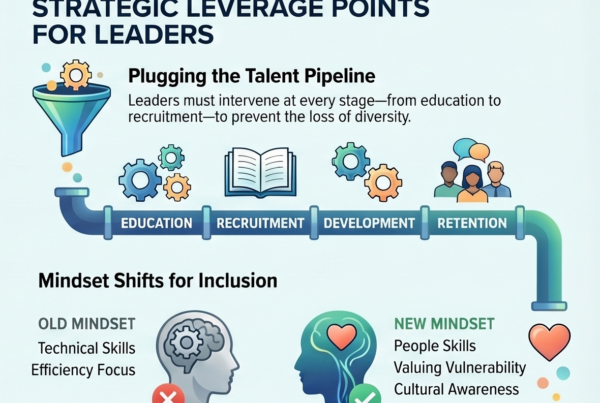
Leaders can begin by pausing before making decisions and considering whether important perspectives might be missing. They can move beyond evaluating fairness based on isolated moments and instead look at patterns over time. They can structure discussions in a way that allows more voices to contribute meaningfully, rather than relying on the same individuals to dominate conversations.
Encouraging challenge is another important shift, particularly when it questions existing thinking or authority. Finally, leaders can develop the habit of reflecting not just on outcomes, but on how decisions were made and who influenced them.
Individually, these actions are simple. Collectively, they reshape how teams operate.
Why this matters now
Organisations today are operating in an environment of increasing complexity. Hiring is expensive and time-consuming, workforce expectations are evolving, and there is constant pressure to deliver more with existing resources.
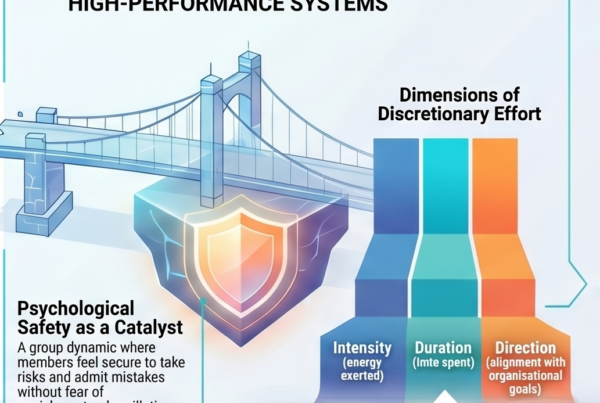
At the same time, a significant portion of organisational capability remains underutilised. This is not because people lack skills, but because the environment does not consistently allow those skills to surface.
Leadership becomes the critical lever in this context. When leadership behaviour is clearer, more consistent, and more deliberate, the same organisation begins to perform differently. More ideas are surfaced, more ownership is taken, and more value is created from the same talent base.
A more grounded way to look at inclusive leadership
We do not view inclusive leadership as a separate initiative or an additional layer on top of existing leadership practices. Instead, we see it as the natural outcome of better awareness, more deliberate behaviour, and higher quality decision-making.
In that sense, it is not something extra that leaders need to do. It is how leadership becomes effective at scale. It ensures that decisions are not only fair, but also credible and repeatable across the organisation.
Final reflection
What How to Be an Inclusive Leader reinforces is simple, but important. Leadership shapes what becomes visible inside an organisation. When leadership is inconsistent, capability remains unevenly expressed. When leadership is deliberate and consistent, more capability shows up.
And when more capability shows up, performance follows.
That is where this conversation moves beyond inclusion and becomes something more practical. It becomes about activating what already exists, but is not yet fully realised.
Buy this book here: https://amzn.to/4vup19z