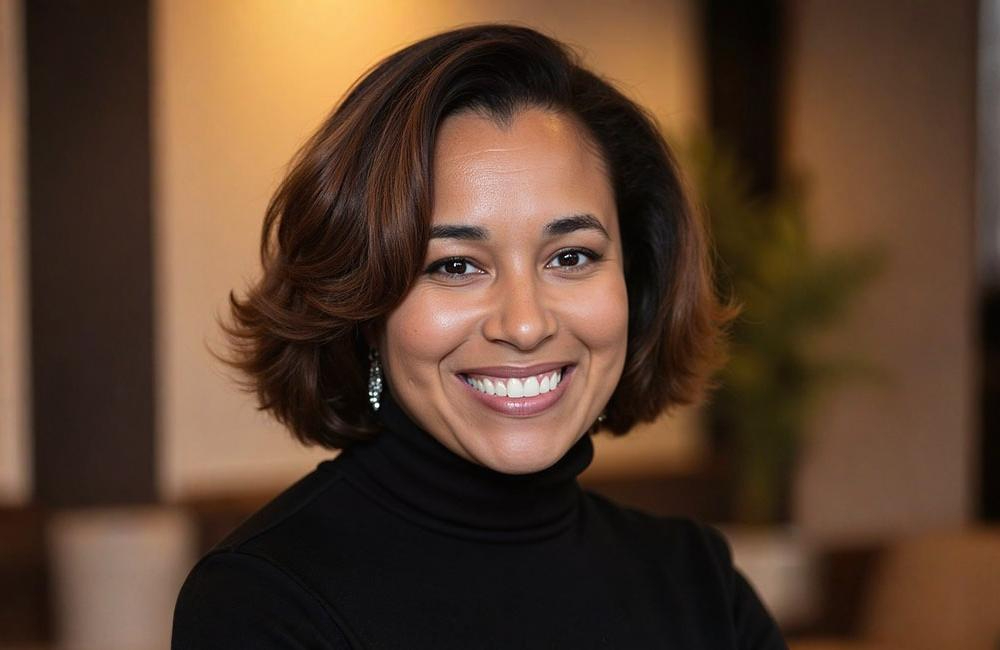

Dominique Dickson is a senior inclusion and culture leader with experience spanning professional services, SaaS, legal, and financial organisations. Holding an MBA from Drexel University, she operates at the intersection of inclusion strategy and execution, helping organisations translate aspiration into measurable cultural and leadership outcomes. Her work focuses on building high-performing environments where leadership accountability, equitable talent processes, and business performance reinforce one another.
Dominique began her career in a CEO and Board executive search practice dedicated to elevating diversity within senior leadership teams, an experience that shaped her understanding of how systems, access, and visibility influence who advances. Since then, she has worked internally with organisations to strengthen hiring, promotion, and succession practices so that leadership selection reflects both performance and people impact. Across industries, she is known for her pragmatic approach to embedding inclusion into leadership assessment, pipeline development, and executive accountability.
In this conversation, Dominique reflects on how organisations can move beyond intention, redesign leadership selection systems, and build diverse pipelines rooted in fairness, transparency, and sustained performance.
Question: What drew you to working at the intersection of leadership and inclusion?
Dominique: I began a formative chapter of my career within a CEO and Board executive search practice focused on elevating diversity among leadership teams. As a black woman, this gave me exposure to how personal values and lived experience can meaningfully show up in my career trajectory. That realization ultimately drew me into culture and inclusion work focused more directly on the internal leadership and employee experience. I found purpose in being able to influence systems in ways that both fulfilled me personally and helped organizations make better decisions for the next generation of leaders.
Question: Where do organisations most often misjudge what inclusive leadership actually looks like?
Dominique: Many organizations still heavily conflate inclusive leadership with strong business performance. High performers are often promoted because they deliver results in customer or client-facing roles, without sufficiently assessing whether they have the capability or desire to lead people inclusively. Inclusive leadership requires more than technical excellence. It demands the ability to develop others, create psychological safety, mentor across difference, and adapt leadership styles to diverse teams. Yet feedback from team members about leadership behaviors is often underweighted or inconsistently gathered in performance evaluations.
Question: What patterns in hiring or promotion quietly work against diverse leadership goals?
Dominique: In hiring, organizations often rely on the same networks and narrow definitions of “relevant” credentials and experience. This approach inevitably produces homogeneous candidate pools. There is often limited creativity in mapping nontraditional backgrounds to leadership success and this is compounded by job descriptions that unintentionally imbed inclusion barriers for prospective candidates and insufficient training for hiring managers on mitigating bias in a recruiting lifecycle. In the promotion policy, the barrier is usually underinvestment. Diverse leadership pipelines require intentional, differentiated development, effective mentorship, and equitable sponsorship as opposed to passive expectations that talent will rise on its own.
Question: What leadership traits are overvalued, and how does that limit who is seen as leadership material?
Dominique: Traits like ‘executive presence’ are often highly subjective and rooted in historically narrow and exclusionary norms. These standards can unintentionally exclude leaders with different communication styles or career paths, despite strong influence and results. There is also an overreliance on referrals and sponsorships that diverse talent may not have had equitable access to, limiting visibility rather than capability.
Question: What differentiates organisations that build diverse leadership pipelines?
Dominique: The difference is accountable intentionality – moving from aspiration to execution. Organizations that succeed at building diverse pipelines define clear aspirations, set measurable goals across hiring, promotion and retention, and hold leaders accountable for progress. They also invest specifically in developing diverse talent and publicly reinforce a culture aligned to those aspirations through sustained executive sponsorship.
Question: Where is the strongest tension between performance and inclusion in leadership selection?
Dominique: The most prevalent tension appears when performance is rewarded in isolation. Promoting leaders with strong business results despite exclusionary leadership tendencies sends a clear signal that reinforces inclusion as secondary or a “nice-to-have,” creating misalignment between stated values and lived employee experience.
Question: What single change would most improve fairness in leadership assessment?
Dominique: Greater objectivity in hiring and promotion assessment processes. Structured interviews and feedback mechanisms, consistent questions and performance standards, and competency or expectation-based scoring rubrics tied to unbiased success profiles significantly reduce the room for bias and improve fairness across talent management functions.
Question: How can boards and senior leaders hold themselves accountable beyond statements?
Dominique: Statements are easy and can be performative; presence is harder and far more impactful. Accountability comes from visible engagement, including showing up to inclusion forums, spending meaningful time with employee communities and sub-communities, tracking progress against inclusive leadership objectives transparently, and being the voice of, not just the signature behind, inclusion commitments. DEI practitioners often aim for inclusion to be embedded in the fabric of the organization. A true indicator of that maturity is when leaders, without the title of Chief Inclusion Officer or equivalent, can articulate the organization’s inclusion strategy with the same fluency, ownership, and understanding as the person who holds that role.
Question: How must leadership selection evolve over the next five years?
Dominique: Organizations will need far greater transparency and granularity in leadership decision-making, including sharing internal processes and real examples of impact, both from the employee and client/customer perspective. Succession planning must also become more responsive to the specific needs of employee populations and comprehensive analyses of how prospective leaders’ teams have thrived culturally and performance-wise under their stewardship, rather than relying solely on generic industry or internal status quo best practices.
Question: What gives you optimism about the future of leadership?
Dominique: The renewed focus on inclusion that followed the U.S.-based events of 2020 came from a painful place but also represented a meaningful shift in how organizations thought about the role leadership plays in cultural responsibility. While the sociopolitical pendulum has since swung, I’m encouraged by the thoughtfulness I see in many organizations considering inclusive leadership strategy today. Even amid external pressure, many leaders are making deliberate, values-driven decisions rather than reactive ones. I’m also optimistic that many inclusion practitioners are maintaining a global, long-term view by recognizing that inclusive leadership credibility comes from consistency, not trend-chasing.