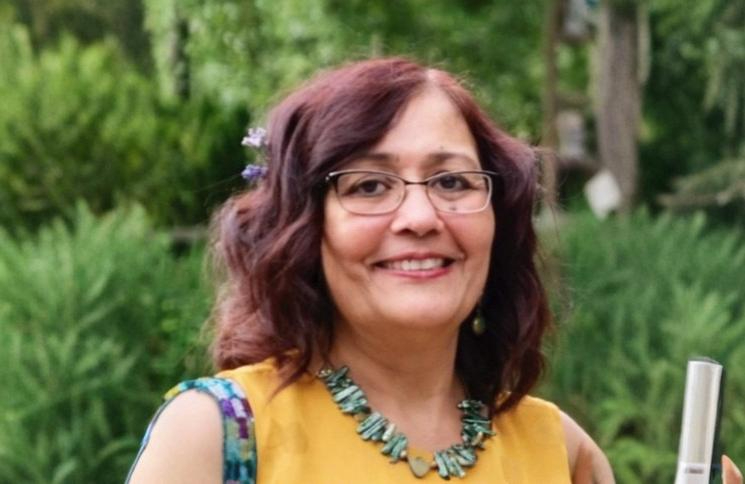
Dr. Renuka Thakore did not struggle because she lacked ability. She struggled because the systems she entered were not built to recognise women like her.
Across Europe, foreign-born professionals with university degrees, particularly non-EU citizens, are far more likely to be over-qualified for the roles they hold. In 2024, non-EU residents were nearly 40 percent more likely to work below their skill level than native-born peers, with women most affected. (Source)
This quiet loss of human potential remains one of the least visible failures of modern leadership systems. Renuka’s story lives inside that reality.
A background shaped by expectation, not opportunity
Renuka grew up in a traditional Indian Kshatriya family where women, especially from respected and financially stable households, were not expected to build careers. Security was assumed. Ambition was not encouraged.
When she moved abroad, she entered a world where credentials, accents, and networks quietly decide who belongs. Without locally recognised experience or professional anchors, her knowledge and capability did not translate into opportunity.
This is not unusual. Across the UK and EU, highly educated migrants are consistently more likely to be under-employed, not because they lack skill, but because foreign experience is too often discounted. (Source)
Here, talent does not disappear. It simply goes unseen.
Starting again at 43, with courage rather than certainty
At 43, Renuka returned to university.
Not because she had failed, but because life, migration, and cultural expectation had interrupted her path. She chose to begin again anyway.
Mid-career women who step away and return know this landscape well. Age and gender bias make reinvention harder just when wisdom is deepest. Renuka entered one of the most exclusionary labour markets in Europe while carrying the quiet fear that her moment had already passed.
Still, she stayed.
She sat in classrooms with students young enough to be her children. She learned in a new country, in a new system, with a new identity, holding herself steady through doubt and invisibility. Not because it was easy, but because she believed her life was not finished speaking
When the system still would not open?
Education gave Renuka new doors to knock on. It did not guarantee that they would open.
After graduating, she built a business. When financial pressure grew, she began a PhD. Yet even with advanced qualifications, she encountered the same structural walls that many highly skilled women and migrants face in academia and research.
In UK academia, gender and ethnic representation in senior positions remains limited. While women make up a substantial share of university staff overall, they are underrepresented at the highest levels. Historically, only around 20 percent of professors were women, and racial diversity among professors has been especially low. (Source)
Meanwhile, broader research into employment conditions suggests that temporary and insecure contracts are common in academic and research careers, particularly in early and mid-career stages. These patterns trap talented professionals in cycles of proving themselves without stability.
The system does not lack talent. It lacks pathways.
So she created what was missing
Rather than waiting for permission, Renuka created her own platform.
She founded the Global Sustainable Futures Network, an international organisation that now connects and empowers more than 600 emerging leaders working across climate resilience, biodiversity, and sustainable development.
Her leadership sits within a global context where women, especially in climate and sustainability arenas, remain underrepresented in decision-making roles. At major climate governance platforms, women continue to be a minority of delegates and negotiators, with leadership figures often below parity. (Source)
In sectors where women’s voices are critical but under-resourced, Renuka built a space where underrepresented leaders can thrive rather than compete for scraps. What institutions failed to offer her, she built for others.
What would a functional system have done differently?
A system designed for people rather than paperwork would have:
- Recognised international experience as an asset
- Supported mid-life reinvention as strength, not risk
- Linked academic insight to real-world impact
- Invested in people instead of exhausting them through insecurity
Instead, many education and research systems remain siloed, rigid, and disconnected from the urgent social and environmental problems they claim to serve. They train people to fit into existing mechanisms rather than to reimagine them.
Renuka did not succeed because the system worked. She succeeded despite the system.
What her story represents?
Renuka’s journey carries a simple truth. The world is not short of capable leaders. It is short of systems that know how to recognise them. Every time someone like her has to rebuild their legitimacy from zero, organisations lose decades of experience, perspective, and wisdom.
EQUAIS exists to change that. Not by celebrating extraordinary survival, but by building leadership cultures where talent does not have to fight to be seen before it is allowed to lead.